
Master Conveyancing in Kenya: 7 simple steps explained 🏡
·

Conveyancing in Kenya: 7-Step Guide 🏡
The conveyancing in kenya process doesn’t have to feel like a stressful blindfolded maze. When the steps are followed properly, buying or selling property becomes predictable, transparent, and legally safe.
This guide walks you through the 7 key steps between making an offer and finally receiving your title deed, all grounded in Kenyan law and written in plain, practical English.
⚖️ Step 1: Offer and Acceptance in the Conveyancing in Kenya Process
Every transaction starts when a buyer makes an offer and the seller accepts. It is not yet legally binding, but it sets expectations about price, timelines, and general intention.
What to agree upfront.
- Purchase price
- Deposit amount (commonly 10 percent under the Law Society Conditions of Sale)
- Timelines
- Fixtures and items included in the sale
💡 Key takeaway: The offer stage is non-binding but establishes the foundation for the entire conveyancing process.
🕵️ Step 2: Conducting Due Diligence
Due diligence is the most important part of conveyancing in Kenya. Your advocate verifies that the property exists, belongs to the seller, and is free from disputes and encumbrances.

What your advocate checks
- Official search at the Ministry of Lands
- Freehold or leasehold status
- Land rates and rents position
- Encumbrances: charges, cautions, restrictions
- Survey maps and boundary setup
- Physical inspection for occupation or disputes
- Company searches where seller is a company
Red flags
- Pending court matters
- Uncooperative sellers
- Unpaid land rates or rents
- Suspicious or inconsistent survey records
💡 Key takeaway: Strong due diligence protects buyers from fraud, lawsuits, and unexpected costs.
💻 Step 2.1: Using Ardhisasa During the Conveyancing Process in Kenya
Ardhisasa is Kenya’s official digital land management platform operated by the Ministry of Lands. Many Nairobi and select county transactions now happen exclusively through Ardhisasa, meaning your advocate must complete key steps online.
What Ardhisasa is used for:
- Paying for certain land-related services
- Lodging and obtaining official land searches
- Verifying property ownership
- Checking encumbrances (charges, cautions, restrictions)
- Lodging the transfer instrument
- Tracking workflow stages digitally
- Receiving notifications when documents are approved or require action
Why it matters in the conveyancing process:
- Faster access to search results (often within hours or days)
- Less risk of fraud because the system verifies ownership digitally
- Clear, trackable steps for registration
- Direct communication from the Ministry of Lands through platform messages
What your advocate will need:
- Your Ardhisasa account (buyer and seller each need one)
- Verified ID and KRA PIN
- Linked phone number and email
- Verified property records (if not already migrated, this causes delays)
Common challenges:
- Delays when property records have not yet been migrated
- System verification errors
- Slow approvals during peak periods
- Sellers without accounts or with outdated ID details
💡 Key takeaway: Ardhisasa has made the conveyancing process in Kenya more transparent and secure, but delays can occur if property records are not fully migrated or if buyer/seller accounts are not properly verified.
📝 Step 3: Drafting and Signing the Sale Agreement
Once due diligence checks out, the buyer’s advocate drafts the Sale Agreement, guided by the Law Society Conditions of Sale. This is the first binding contract.
What the Sale Agreement should cover:
- Purchase price and deposit
- Completion period (commonly 90 days)
- Completion documents
- Required consents
- Penalties for breach
- Dispute-resolution clause
After signing, the buyer pays the deposit into a stakeholder or escrow account.
💡 Key takeaway: The Sale Agreement is legally binding and outlines the rights, duties, and protections for both parties.
💰 Step 4: Payment of Deposit and Escrow Handling
The deposit is paid immediately after signing the Sale Agreement.
Why this step matters
- Escrow protects both parties by ensuring funds only move after formal completion
- Demonstrates buyer commitment
- Allows seller to prepare completion documents
💡 Key takeaway: Escrow ensures that neither party is exposed during the transaction.
🧾 Step 5: Consents and Clearances
Conveyancing in Kenya requires specific consents depending on the land type. Missing consents can render a transaction void under the Land Control Act and related statutes.
Typical consents
- Land Control Board consent (for agricultural land)
- Spousal consent
- Rates clearance certificate
- Rents clearance certificate (leaseholds)
- Lessor’s consent to transfer (leaseholds)
- KRA PIN verification for each party
💡 Key takeaway: Consents legally validate the transaction and must be secured before the transfer is registered.
📑 Step 6: Completion and Transfer
Once all consents and documents are ready, the buyer pays the purchase price balance. The seller then hands over the completion documents.
These usually include:
- Original title deed
- Rates and rents clearance certificates
- LCB consent (where applicable)
- Executed transfer instrument
- Seller’s ID, PIN, passport photo
- Spousal consent
Your advocate ensures compliance with the Land Registration Act before releasing funds.
💡 Key takeaway: Completion is the formal exchange of the purchase price for legally required documents.
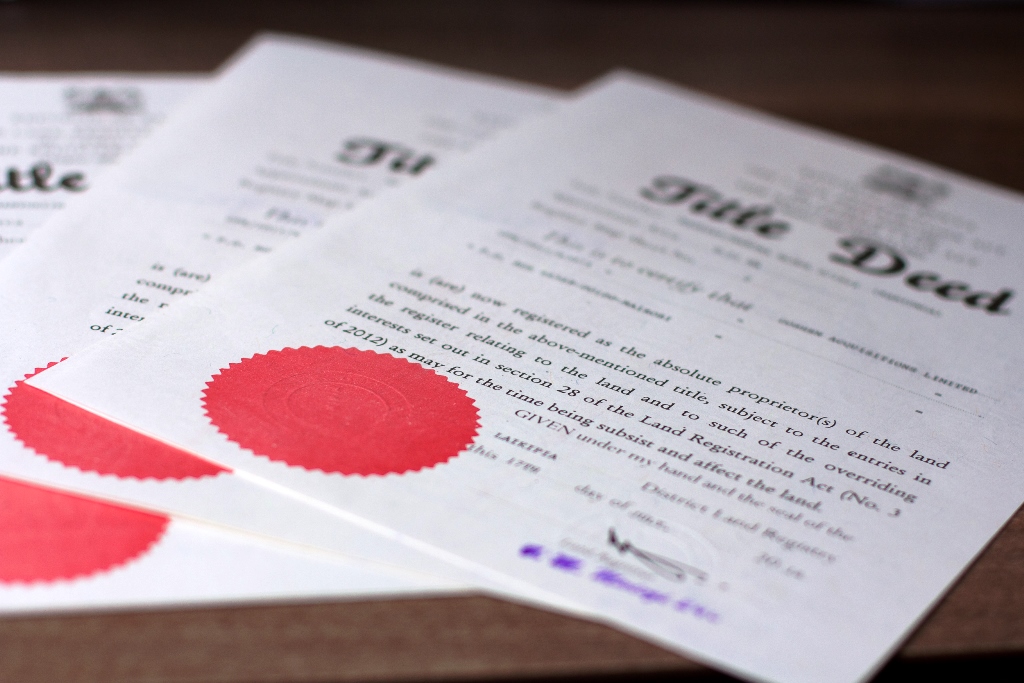
🏛️ Step 7: Registration and Issuance of Title Deed
In conveyancing in Kenya, the final step is registration at the Ministry of Lands.

This involves:
- Stamp duty valuation and payment under the Stamp Duty Act
- Lodging the transfer instrument
- Cancellation of the old title
- Issuance of the new title deed
Estimated timelines
- Stamp duty valuation: 7–21 days
- Registration: 14–30 days
- Title issuance: varies by registry
💡 Key takeaway: Registration is the legal moment ownership transfers to the buyer.
⚠️ Common Risks to Watch Out For
- Fake or forged titles
- Sellers who are not actual owners
- Succession disputes
- Leasehold land with few years left
- Land under injunction or investigation
- Sellers rushing buyers to pay before due diligence
- Mismatched survey details
💡 Key takeaway: Most risks are avoidable by working with a qualified conveyancing advocate.
🧾 Quick Checklist for Buyers
Before signing
- Confirm seller identity
- Conduct official search
- Inspect the land
- Check rates, rents, consents
- Hire a conveyancing advocate
During the process
- Ensure the Sale Agreement is clear
- Pay deposit through escrow
- Track required consents
After completion
- Collect your new title deed
- Confirm stamp duty payment
- Follow up on registration
💡 Key takeaway: A simple checklist keeps your transaction safe, structured, and on track.
🧾 FAQ’s
📞 Thinking of Buying or Selling Property?
We support clients across Kenya with clean, compliant, stress-free conveyancing. If you want everything handled properly from start to finish, reach out to Herman Tambo Law Advocates.
⚠️ Legal Disclaimer
This article provides general information only and is not legal advice. Always consult a qualified advocate for your specific transaction.
Ready to discuss your legal needs?
Get the clarity and guidance you need. I am here to help you navigate your legal journey with confidence.